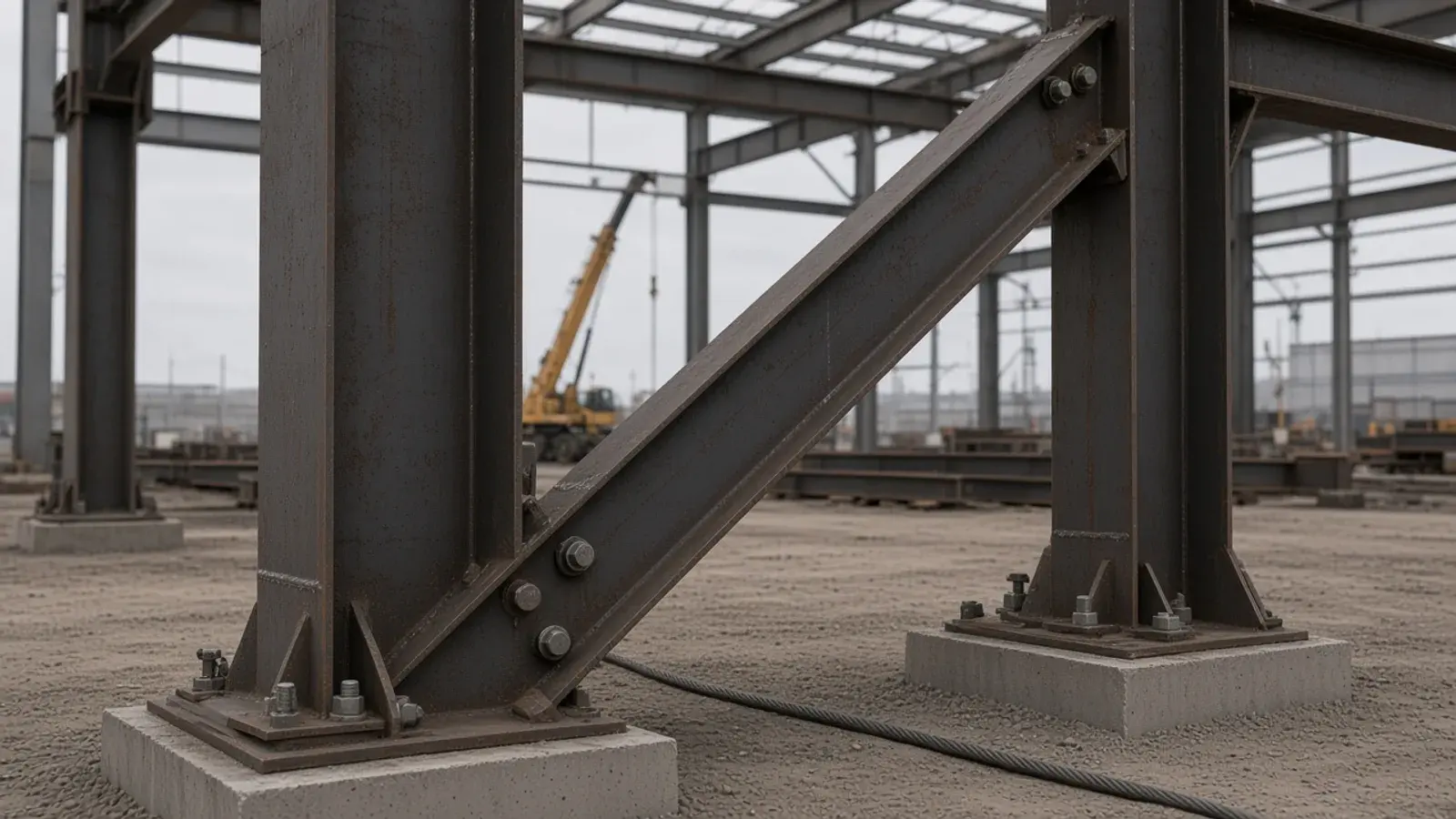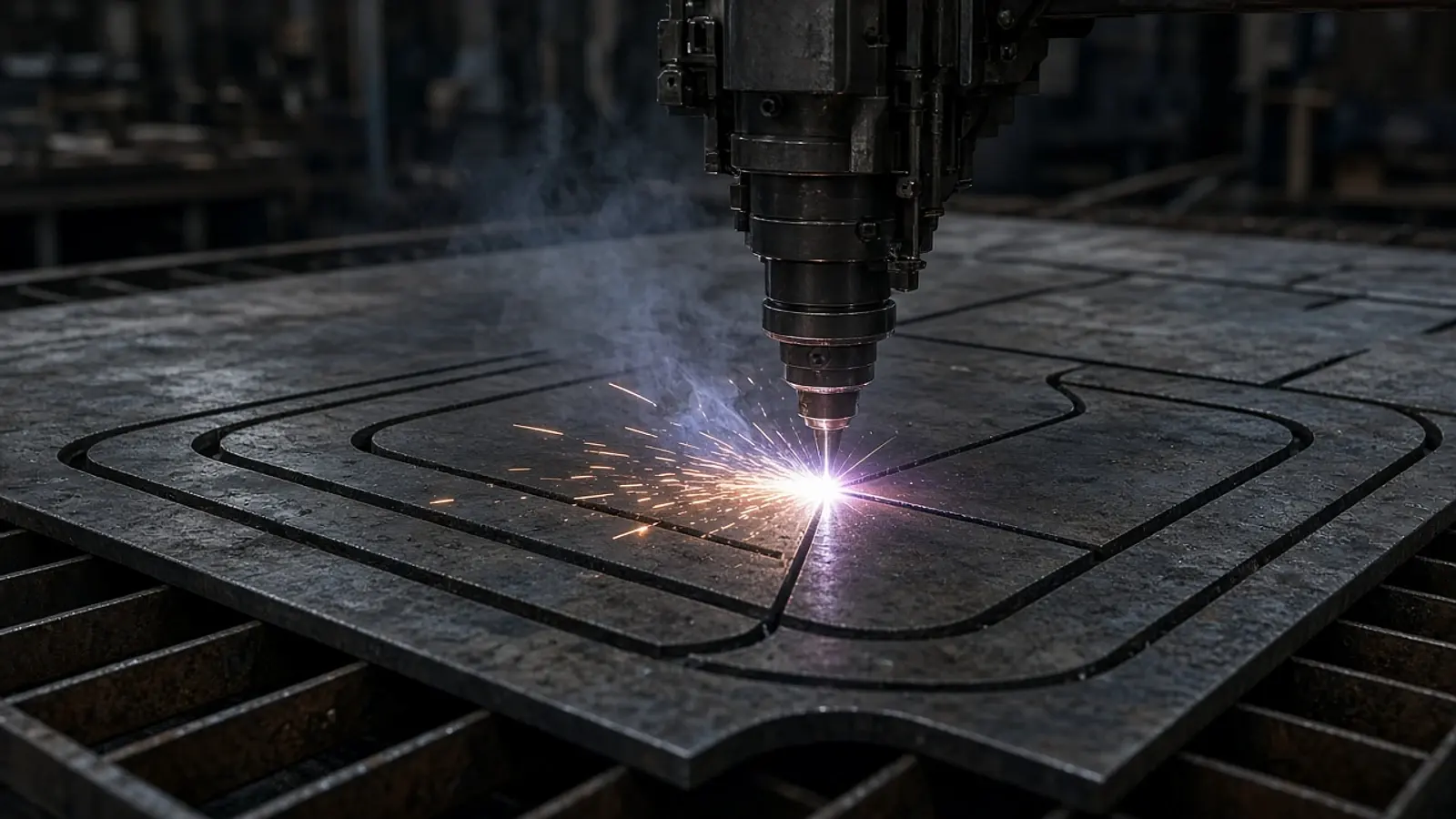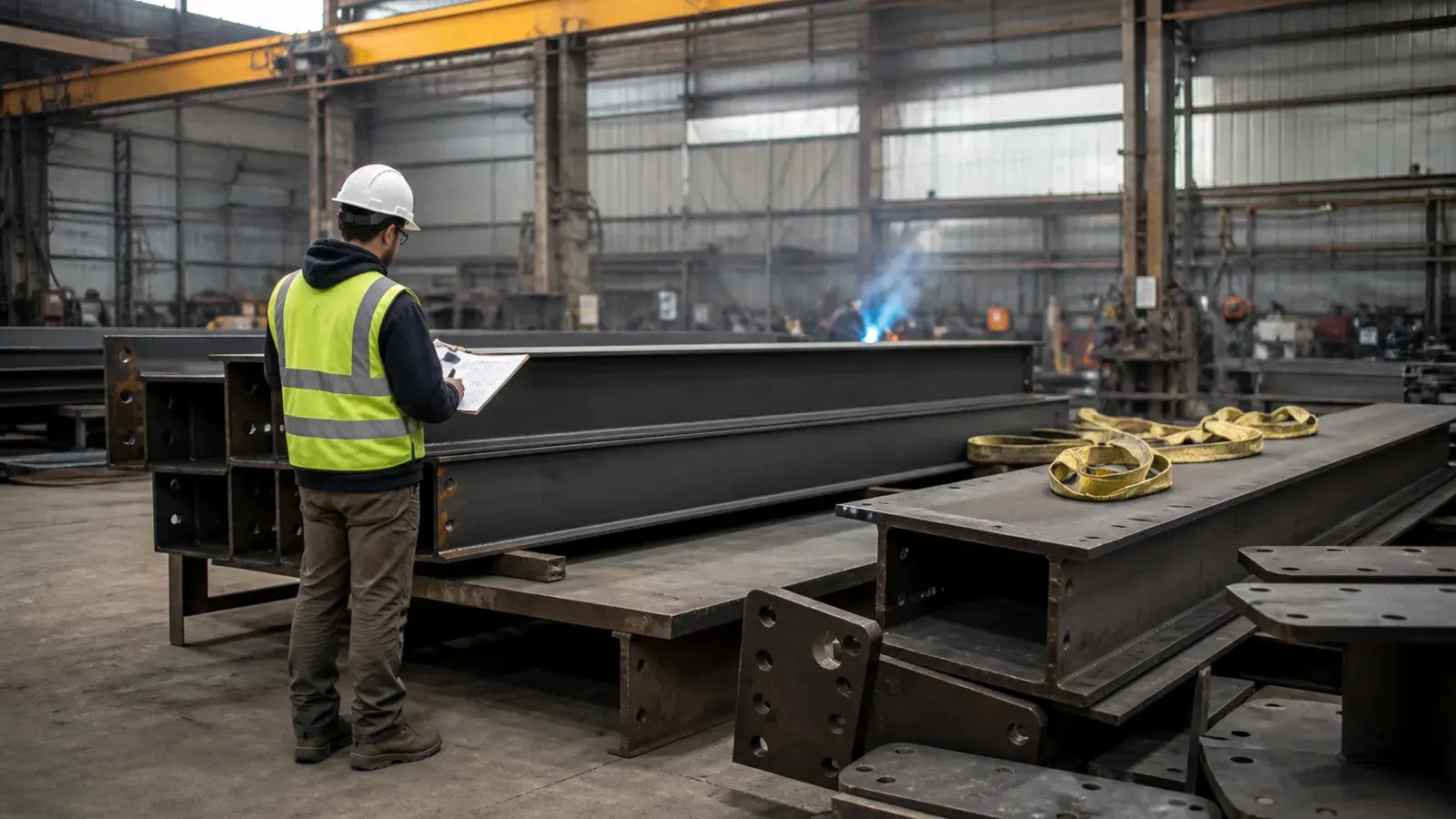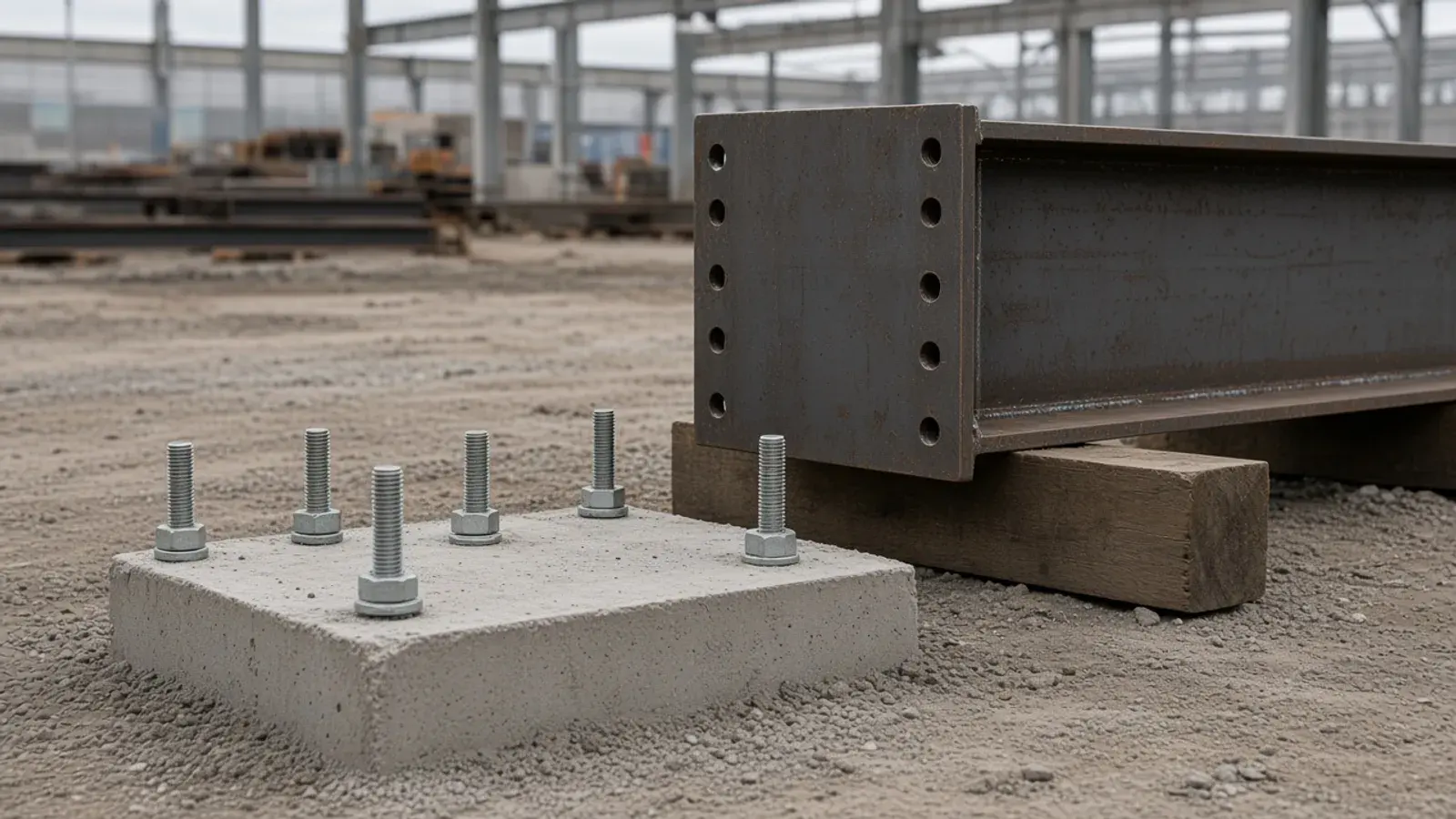
In heavy steel the erection day is not the moment the truck enters the gate. It is the day the anchors are measured, the column base is closed to that measure and the first column sits in a frame. At NFS Çelik & Yapı we do not send steel while the concrete is only “about right”. An approximately right anchor forces a shop-accurate base plate to be ground on site. A ground base grows risk, not the joint.
Three measures: axis, level, drift
Once the anchor group is cast, three records are kept: grid axis, top level and group drift. The column base is not cut until those three are written. If the axis has moved, the base holes shift; if the level is low, shim and grout thickness enter the plan; if drift is outside the limit, the group is not cut — the concrete side is revised. Reverse that order and the crew “makes the plate fit”. That usually means slotted holes, a poor seat and often a new base. A new base is not the job of the column waiting on the truck.
The first column wants a frame
Standing one column is not erection. The first grid is not left without a frame — vertical bracing or temporary ties. Even if the anchors are ready and the steel has arrived, the hall is not “open” until crane stands, temporary stability and the neighbouring pour line are written down. On a tight OIZ plot, fresh concrete also restricts the truck lot; the ground where a long column will land is a line item of its own, next to the anchor group. Shipping is written when that item is closed.
Steel does not wait on the anchors — the job does. The truck comes when the anchor record is closed. Keeping that order cuts both making-do on site and cutting a second base in the shop.