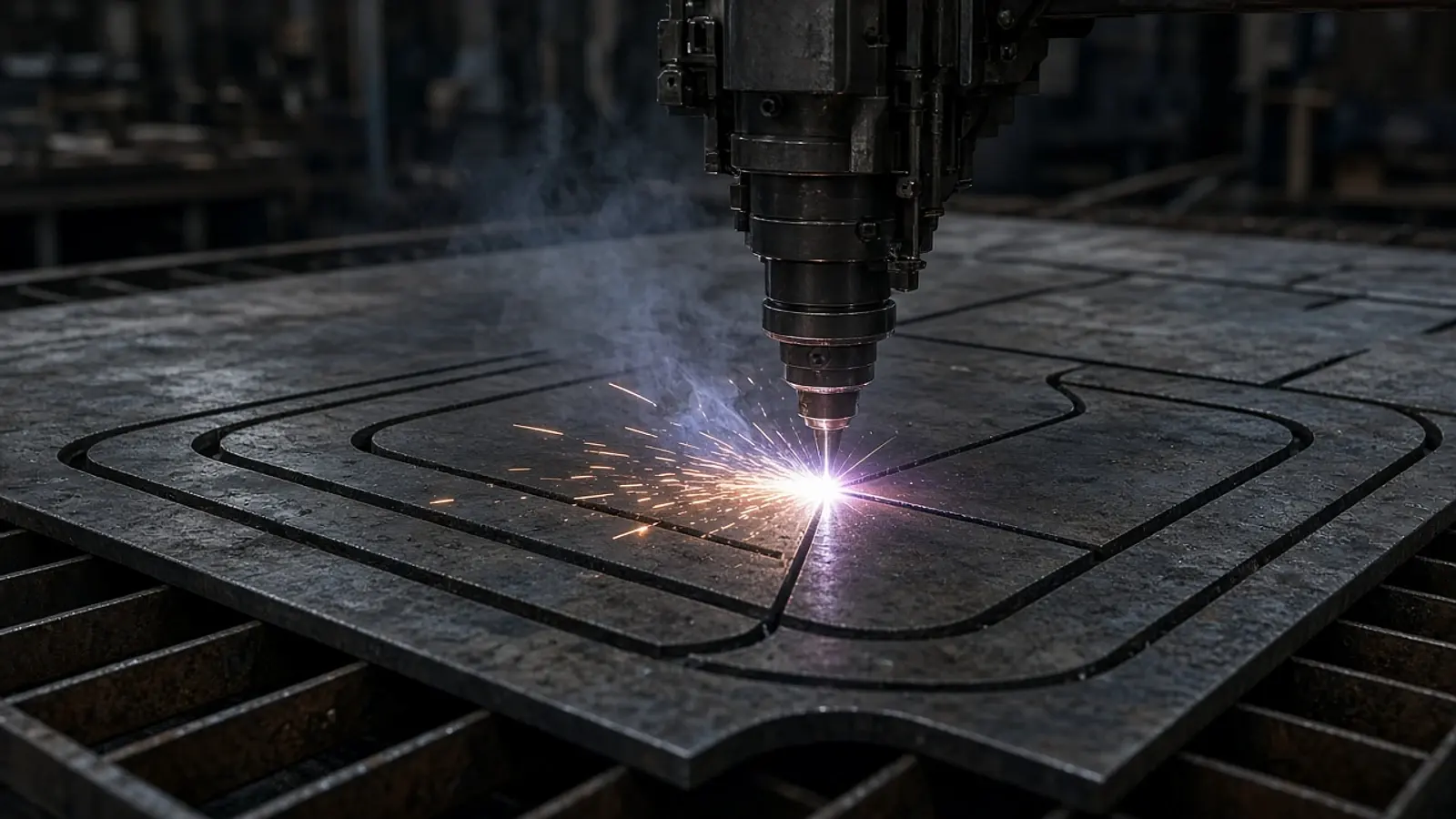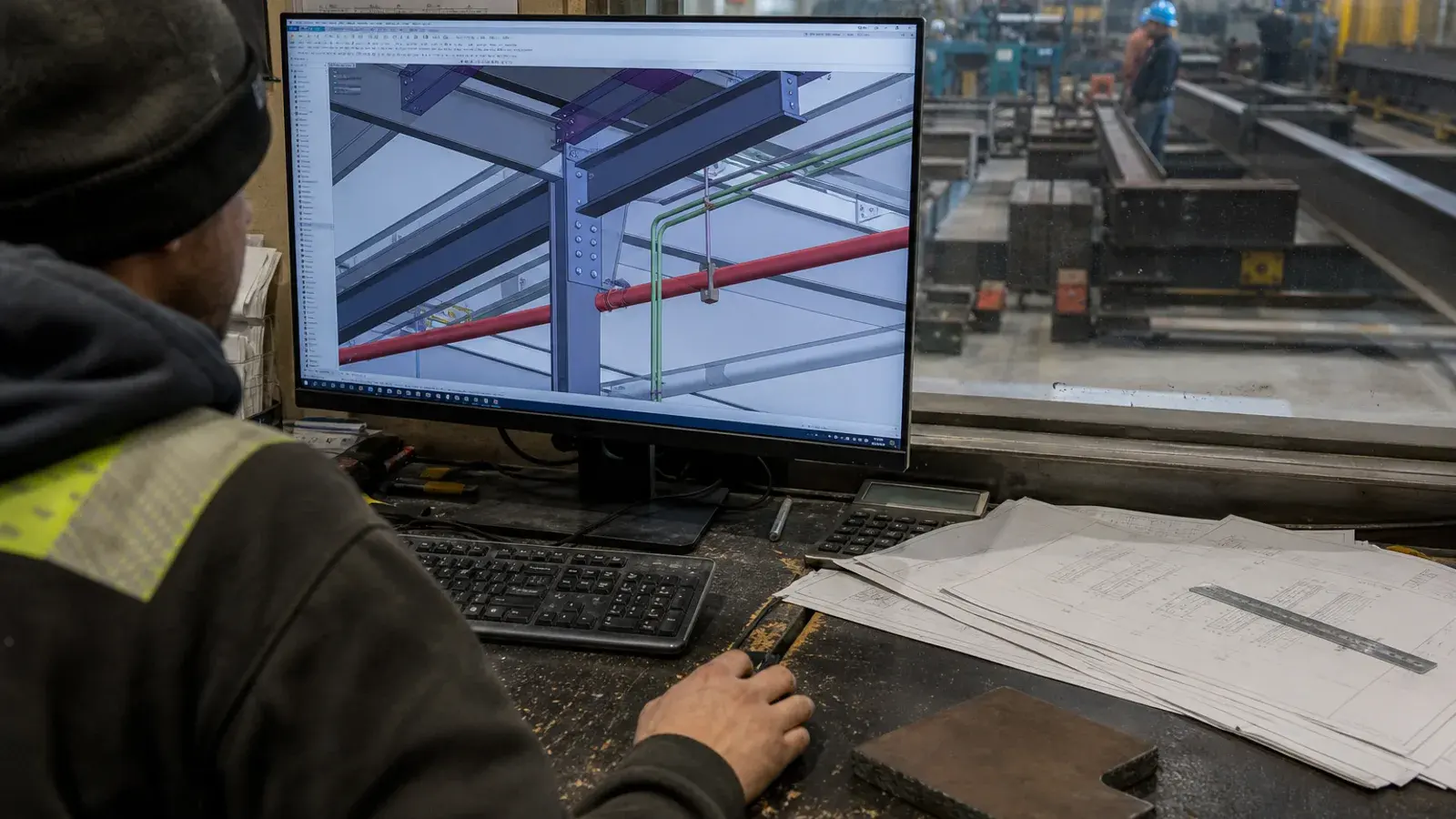
In heavy steel the most expensive revision is the one that arrives after plate is cut. If a crane-rail level, an MEP hanger or an existing column head is missing from the model, the site crew is left to “make it fit”. That usually means grinding, extra weld and often a new piece. If the AutoCAD sheet and the Tekla model tell different stories, the shop builds the last conversation — not the right drawing.
Piece marks are the shared language
Every shop drawing has a mark, a bolt list and a weld preparation. If that mark never reaches the erection plan, a beam off the truck goes to the wrong grid. Clash review is more than “does steel hit steel?” Hangers, fire mains, door lintels and the crane runway also have to sit in the model. At NFS we treat model handover as the point where shop and site read the same piece list.
What must be closed before the shop starts
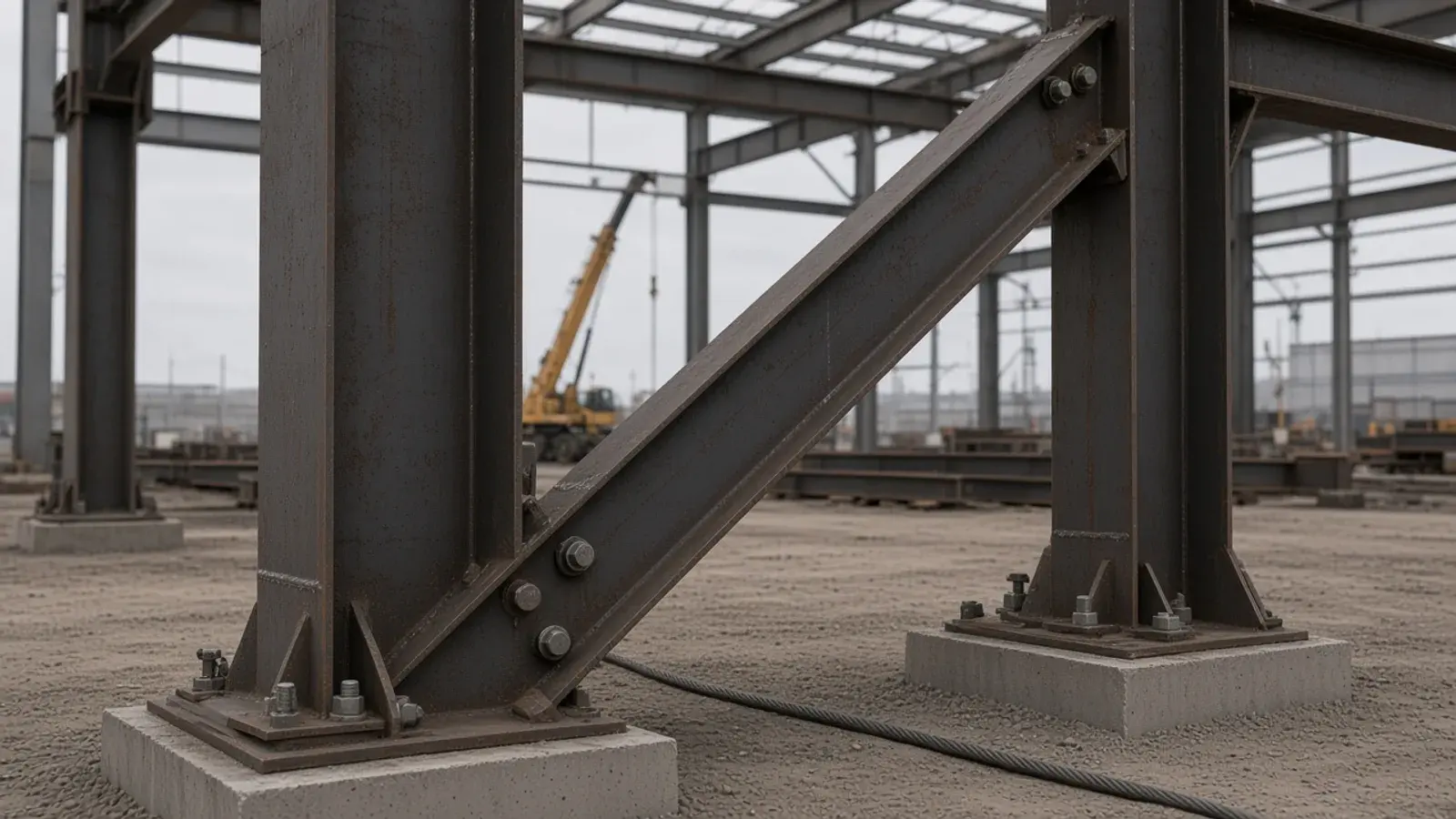
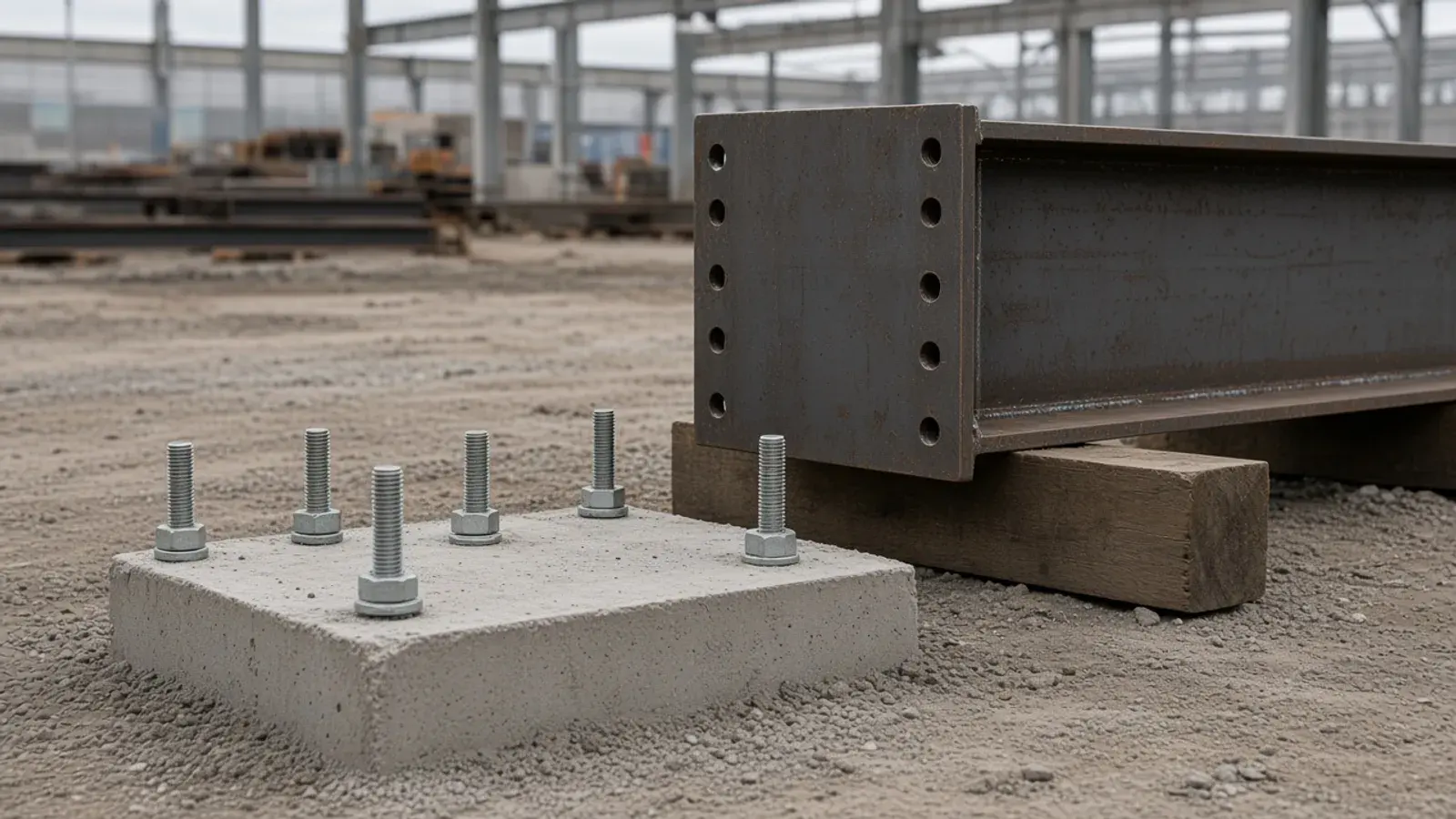
If an anchor has drifted, the base is revised — the plate is not cut first. If the crane supplier changes wheel loads, beam and column stiffness are checked again. If facade openings clash with angle lines, the model moves before paint. Every plate cut without those three checks becomes risk, not stock.
A useful clash pass ends before the cutting order, not after someone says “the model is done”. Keeping that order reduces the need for heroics on site.